Metro Rail in India 2026: Complete List of Cities, Routes, Fares & Latest Updates
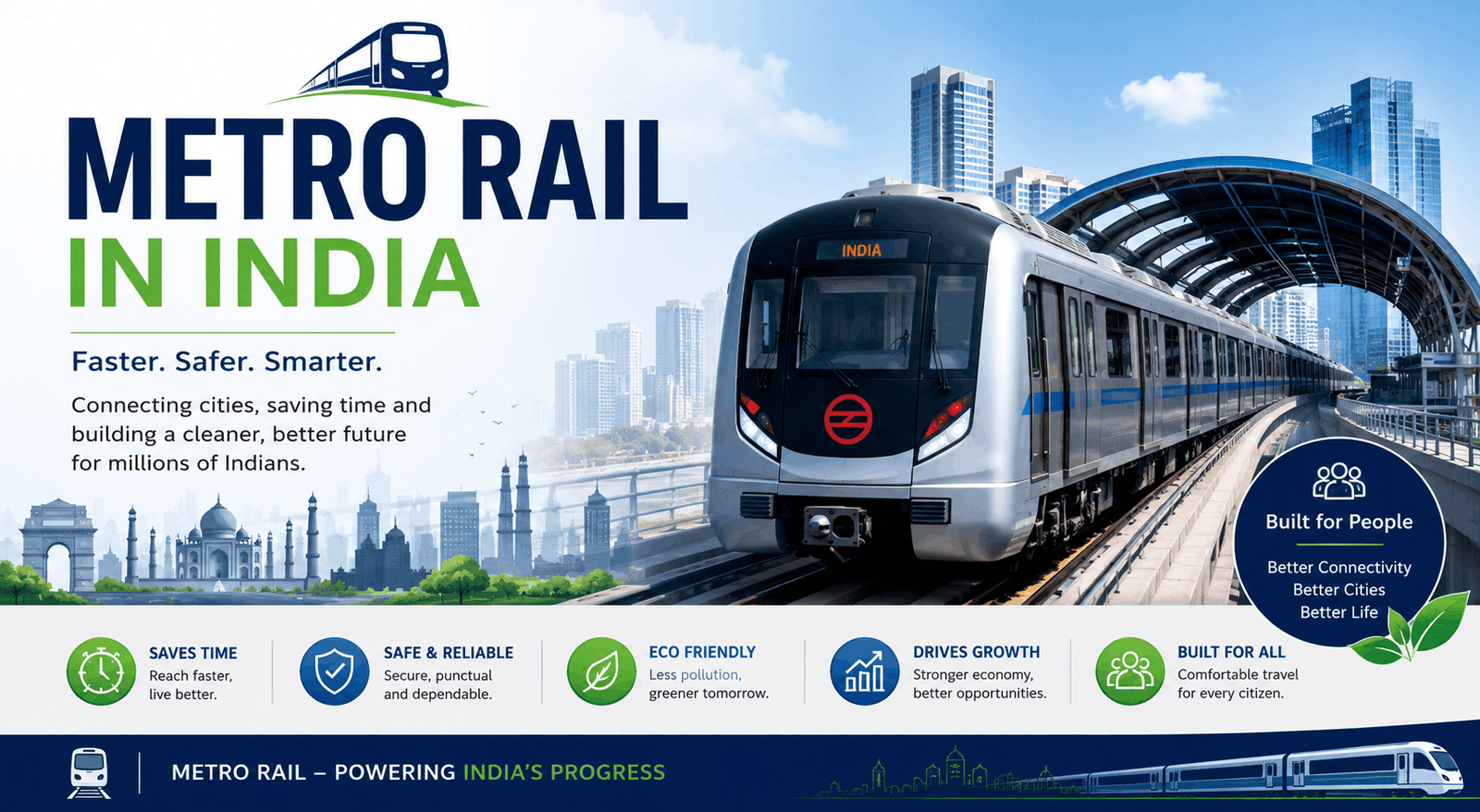
Metro rail systems in India have revolutionized the modes of transportation by providing quick, safe, inexpensive, and eco-friendly transport facilities in big cities. In 2026, there will be more than 1,070 km of metro rails functioning through 21 different metros making it one of the biggest metro rail networks in the world.
Being a commuter who wants to know about thier local metro rail, a traveler willing to visit metros for the first time, or an academician trying to do research on the development of metros, here is all that you need.
History of Metro Rail in India
Kolkata Metro Rail was India’s first metro system which began operations in 1984. this was the revolution in Indian transport system and makrked as the beginning of modern urban rail in the country.
After successful operations of Kolkata Metro, Delhi Metro Rail was real game-changer. The Delhi Metro(started in 2002), had set a new benchmarks in efficiency, punctuality, and engineering excellence. Its success inspired dozens of other cities to adopt metro systems as part of India’s “Smart Cities Mission” and its urban development goals.
Benefits of Metro Rail in India
The metro rail system comes with various benefits including:
- Time Savings – Save time by avoiding heavey road traffic and reach destinations quickly with fast speed and fewer stops.
- Affordability & Convenience – Metro services are affordable, come with air conditioned coaches, automated ticketing system and even mobile app support.
- Environmental Impact – Metro system helps reduce air pollution by reducing the number of private vehicles on the road. Thousands of individuals will now commute to work in electric metros.
- Economic Growth – Helps in boosting property values along corridors, provide employment opportunities, easy access to office, educational institutions, hospitals and tourists places.
- Safety & Modernity – Includes modern technology such as CCTV cameras, metal detectors, escalators, elevators, and platform screen doors (at many stations).
Operational Metro Systems in India (2026 Overview)
Here is a summary of major operational metro networks:
| City / System | Operational Length (approx.) | Stations | Daily Ridership (peak) | Key Highlights |
|---|---|---|---|---|
| Delhi Metro (NCR) | ~350+ km | 250+ | 4.5–6 million | Largest network, extensive connectivity |
| Bengaluru Metro | ~95–100 km | 60+ | High growth | Rapid expansion in IT city |
| Hyderabad Metro | ~70 km | 60+ | Strong | Elevated corridors |
| Mumbai Metro | ~70–90 km | 50+ | Growing fast | Underground + elevated |
| Kolkata Metro | ~60 km | 40+ | Steady | India’s oldest |
| Chennai Metro | ~60+ km | 40+ | Moderate | Mixed underground |
| Jaipur Metro | Operational lines | – | Local | Pink Line prominent |
| Ahmedabad Metro | ~67 km | – | – | Gujarat’s major system |
| Others (Lucknow, Pune, Nagpur, Kochi, etc.) | Varies | – | – | Expanding rapidly |
Note: Figures are approximate as of mid-2026. Total operational network exceeds 1,070 km across 21 systems.
Popular city-specific guides (internal links recommended):
- Delhi Metro Routes & Fares
- Mumbai Metro Map & Lines
- Bengaluru Namma Metro
- Jaipur Metro Guide
Under Construction & Planned Upcoming Metro Projects
India continuesly working aggressively on metro expansion. Thousands of kilometers are under construction in cities like:
- Surat Metro
- Pune Metro Phase extensions
- Delhi Phase IV & RRTS corridors
- New systems in Visakhapatnam, Vijayawada, and others
Till 2027–2030, these metro network is expected to cross 2,000 kms, with lighter systems like Metrolite and Metro Neo serving smaller cities too.
How to Use Metro Rail – Practical Tips
- Tickets & Payments — Smart cards, QR codes, UPI, and mobile apps (DMRC, Namma Metro, etc.).
- Peak Hours — Avoid 8–11 AM and 5–9 PM for comfortable travel.
- Accessibility — Most stations have elevators and dedicated facilities for differently-abled passengers.
- Safety — Ladies’ coaches, CCTV, and security personnel available.
- Tourist Advice — Buy daily/ tourist passes in major cities for unlimited travel.
Future of Metro Rail in India
Our government working hard, to make Indian cities more livable through integrated multi-modal transport (metro + buses + RRTS + cycling). Focus areas include:
- Sustainability (more electric systems)
- Last-mile connectivity
- Technology integration (AI for crowd management, real-time updates)
- Regional Rapid Transit Systems (RRTS) linking cities
Conclusion
Metro rails do not simply provide a mode of transportation but are symbol of modern India. Metro rails contribute to the development of cities by addressing issues such as traffic congestion, pollution, and economic growth.